

In the local restaurant game, online reputation is everything. For a new or independent spot in the Poconos, stacking up five-star Google reviews can mean the difference between a packed weekend and empty tables. But what happens when a business gets impatient and decides to buy a digital reputation overnight?
You get what’s currently happening at Guac-O-licious, a hybrid Tex-Mex counter operating inside a Stroudsburg gas station and grocery hub.
While the spot initially built some genuine, organic word-of-mouth chatter over the winter for its massive portions and birria tacos, a recent, massive spike in their Google Maps profile has exposed a textbook case of sloppy, artificial review manipulation.
Here is an inside look at how the digital astroturfing campaign unraveled.
1. The Smoking Gun: "Lorem Ipsum" Loves the Service
The most definitive proof of a paid review-farm campaign came this week from a reviewer named—literally—Lorem Ipsum.
For the uninitiated, "Lorem Ipsum" is the standard placeholder text used by web designers and programmers before a site or script goes live. Whoever programmed the network of burner accounts to pump Guac-O-licious forgot to change the default profile name before launching the script.
The account left a glowing five-star review reading:
“Saif was a great server.”
2. A Statistically Impossible Week
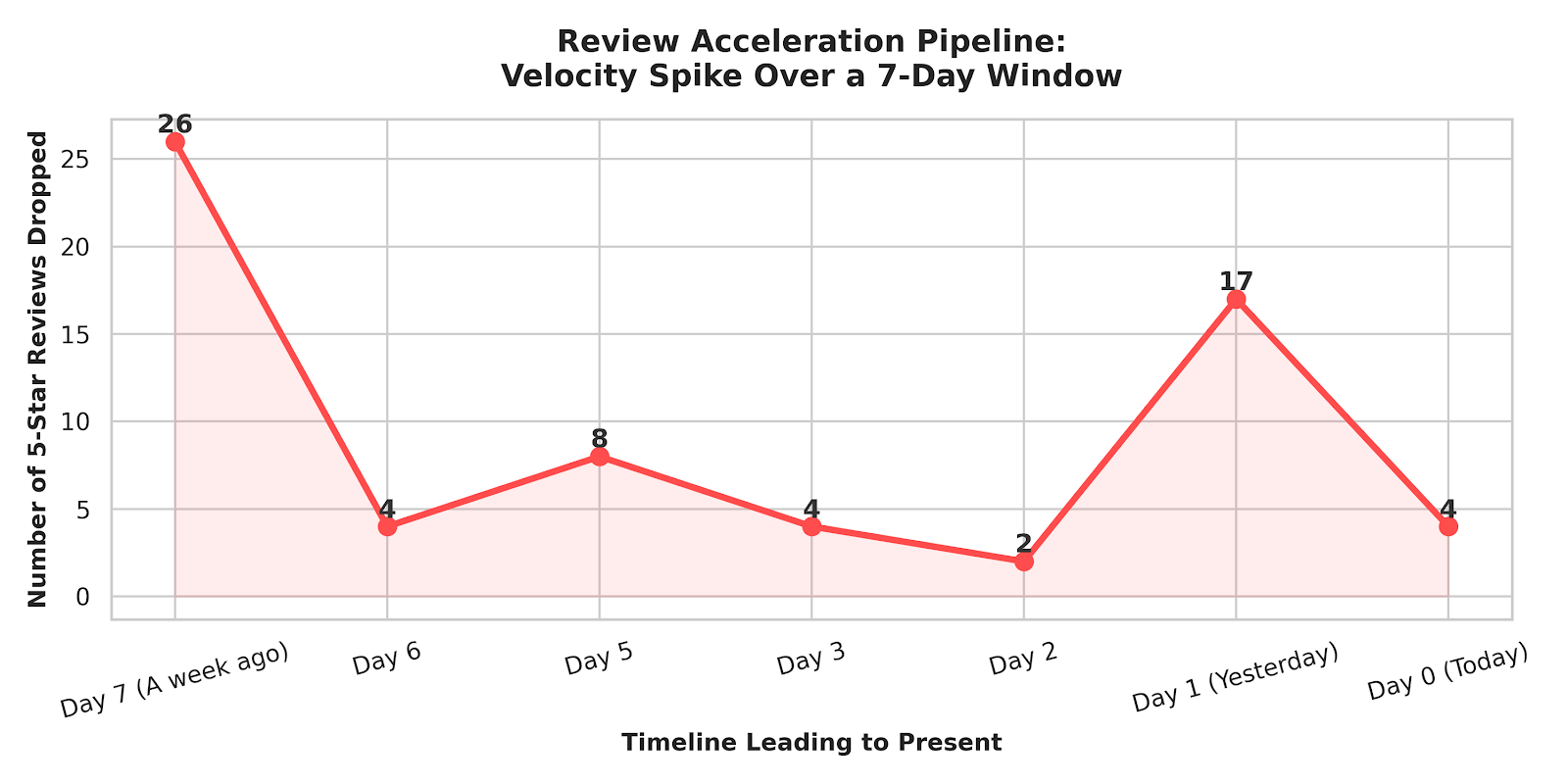
Organic review growth for a neighborhood taco counter is a slow burn. A business might get a few reviews a week, or a dozen in a good month. Yet, over a single seven-day window, Guac-O-licious suddenly generated a massive spike of nearly 50 five-star reviews.
A velocity that high for a local gas-station eatery doesn't happen naturally—it points directly to a bulk-purchased package from a black-hat marketing agency.
DATA EVIDENCE: REVIEWER PROFILE BREAKDOWN
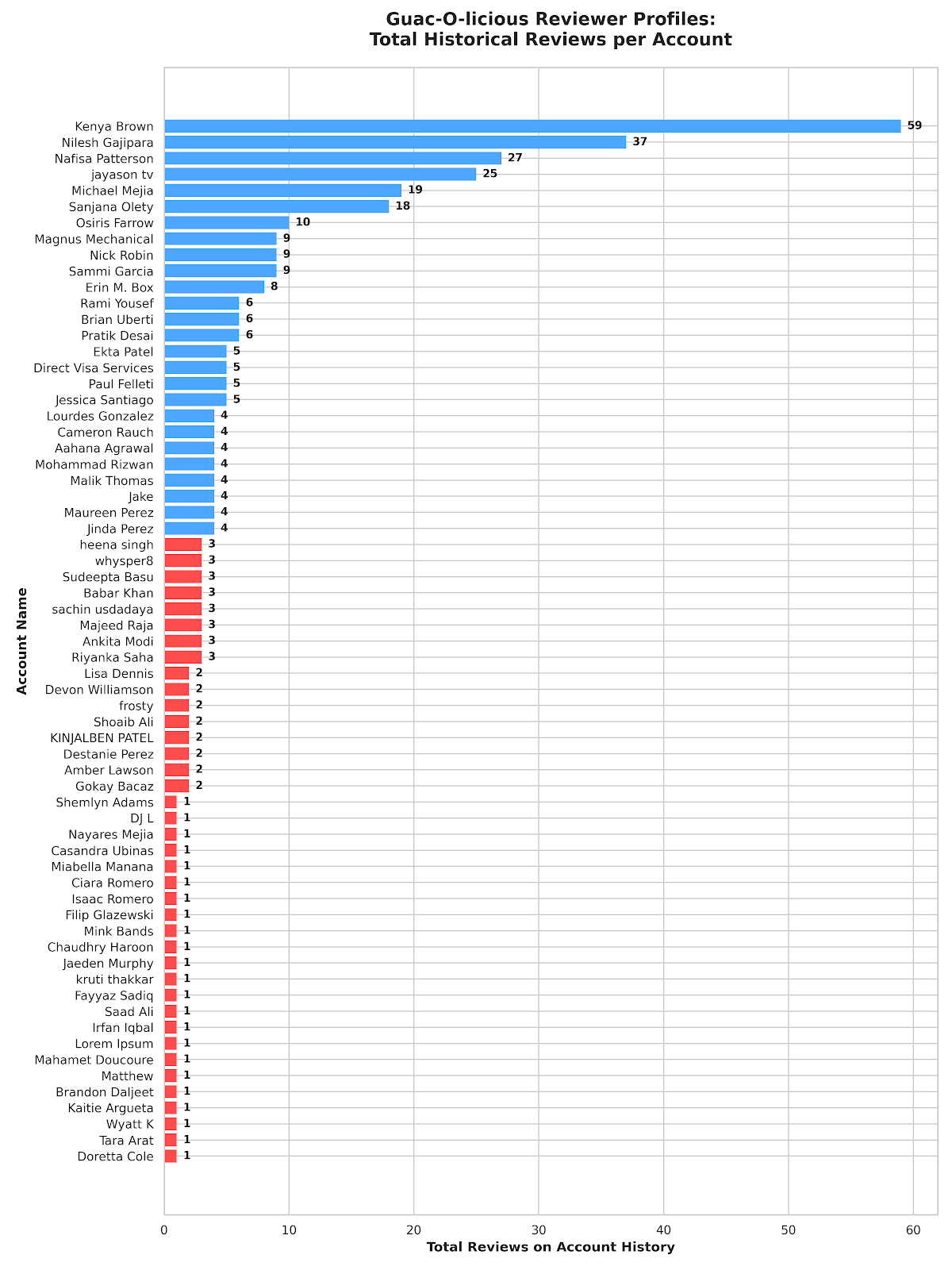
- The 60% Burner Baseline: Data analysis of this specific surge shows that a staggering 60% of all these reviews came from accounts with three or fewer lifetime reviews.
- The Single-Use Army: A massive block of these profiles were brand-new accounts with absolutely zero geographic history, deployed exclusively to leave this one single rating.
3. The "City View" from a Stroudsburg Gas Station
When you buy cheap, outsourced review packages, the copywriters usually have no idea where the business actually is. This led to some hilarious contradictions in the text left by the apparent "bots":
"The food I’ll say is great, too. And I think the city view from window is nice. They also have store and gas too so very convenient." — Ankita M.
Praising a scenic "city view" from a local convenience store window is a dead giveaway that the person writing the review has never stepped foot in Monroe County, let alone the restaurant itself.
4. Coordinated Name-Dropping
An organic wave of reviews naturally focuses on the food—the salsas, the meats, the prices. But nearly every single profile in this recent 7-day dump went out of its way to specifically name-drop employee names like Saif and Fayyaz with rigid uniformity.
Over 36% of all written comments in this wave followed a highly specific semantic script:
- "Great experience with saif"
- "Saif was helpful"
- "Saif it was amazing"
- "Fayyaz is amazing! He made me a beautiful meal to go!"
This uniform behavior happens when a review-buying brief explicitly commands the click-farm to inject specific employee names to make the reviews look authentic to Google's automated spam filters. Instead, it left behind a blatant digital fingerprint.
🤔 Why This Matters for the Poconos Food Scene
When local businesses buy fake engagement, it doesn't just trick consumers—it actively harms the honest, hard-working restaurant owners in the Stroudsburg area who are earning their reputations the hard way, one real plate at a time.
The irony? Guac-O-licious actually had local regulars. Early reviews from a few months ago showed genuine locals praising their student discounts and Uber Eats orders. By panicking and buying a cheap, sloppy wave of automated bot reviews, the ownership has jeopardized their actual standing with Google—and risked turning a promising local spot into a community punchline.